Epidermoid Cyst Removal Christchurch: The Complete Guide to Minor Surgery & Skin Health
Have you noticed a small, firm lump just beneath your skin? Perhaps it’s been there for years, or maybe it’s recently become tender and inflamed. In the medical world, these are most commonly Epidermoid Cysts. While they are almost always benign (non-cancerous), they can cause significant physical discomfort and self-consciousness.
At 1 Health in Wigram, we believe that "minor" surgery is still a major deal for the patient. This guide, written by Dr. Bernard Teo, explores everything you need to know about identifying, managing, and permanently removing epidermoid cysts in a clinical Christchurch setting.
1. What Exactly is an Epidermoid Cyst? (The "Cheesy" Truth)
Many patients come into our Wigram clinic calling these "sebaceous cysts." As Dr. Bernard notes, this is actually a common misnomer.
An epidermoid cyst (also known as an epidermal inclusion cyst or keratin cyst) forms when surface skin cells—which should normally shed away—migrate deeper into the skin and multiply. These cells form a small sac and continue to produce a protein called keratin.
The Key Difference:
- Sebaceous Cysts: Arise from oil glands and contain sebum (oil). These are actually quite rare.
- Epidermoid Cysts: Arise from the skin’s surface layers and contain keratin—a soft, white, "cheesy" material that can sometimes have a distinct odor if the cyst ruptures.
At 1 Health, our first step is always a clinical diagnosis to ensure your lump is indeed a keratin-filled cyst and not a lipoma (fatty lump) or something requiring more urgent oncology intervention.
2. Recognising the Symptoms: Is it a Cyst?
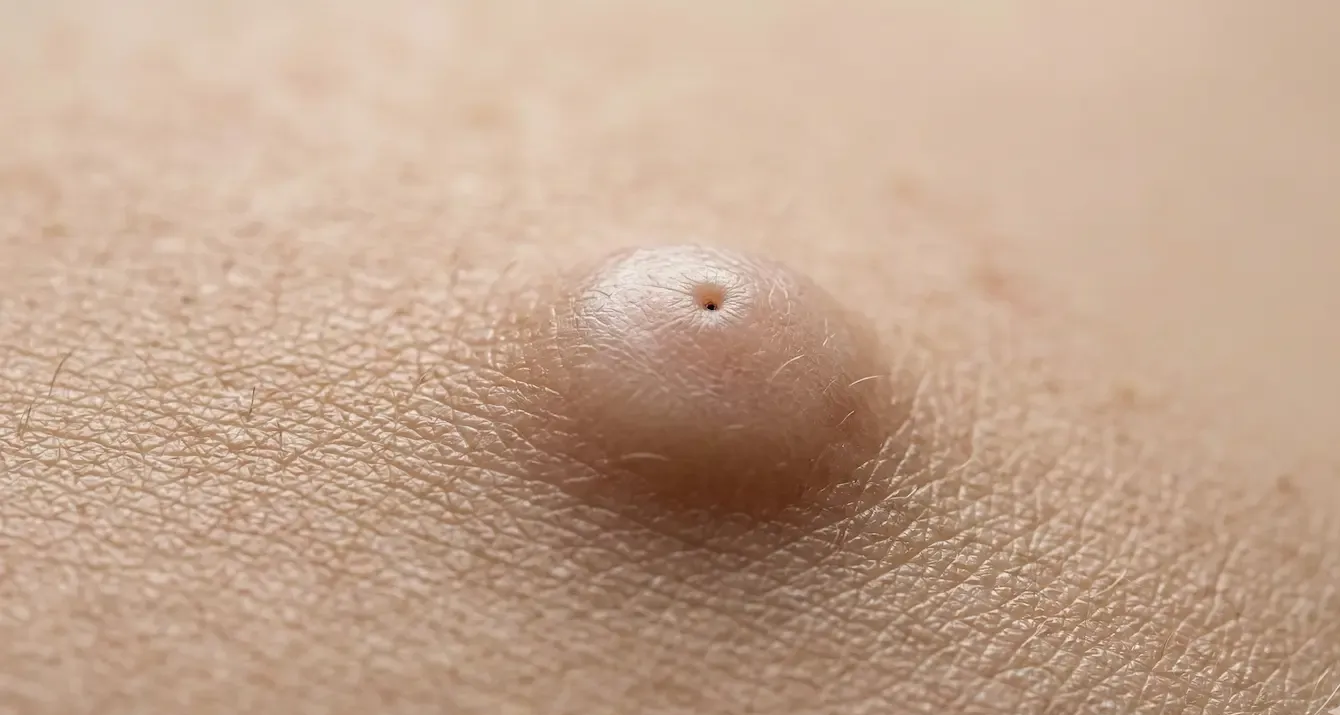
Epidermoid cysts can appear anywhere on the body, but they are most frequently found on the face, neck, back, and trunk. Clinical Signs to Look For:
- A small, round bump: Usually firm to the touch and easily moved under the skin.
- The "Punctum": Often, there is a tiny blackhead-like opening at the center of the lump. This is the "plug" of the cyst.
- Slow Growth: These aren't overnight developments; they usually grow over months or years.
- Redness or Tenderness: If the cyst is "angry," it likely means it has ruptured internally or become infected.
3. Why Did I Get This? (Causes and Risk Factors)
Most epidermoid cysts occur without a specific "event," but they often stem from a minor injury to the skin, a blocked hair follicle, or even a past surgical incision.
Who is most at risk?
In our Christchurch patient base, we see these most often in:
- Young-to-middle-aged adults: Specifically men, who are twice as likely as women to develop them.
- Acne-prone skin: Previous skin inflammation can "trap" cells beneath the surface.
- Genetic Predispositions: Conditions like Gardner syndrome or basal cell naevus syndrome can lead to multiple cysts.
4. The "Danger Zone": Why You Should NEVER Pop a Cyst
It is incredibly tempting to try and "pop" a cyst at home, especially if it looks like a large blemish. Dr. Bernard’s clinical advice is simple: Don't.
The Risks of DIY Removal:
- Infection: Your bathroom is not a sterile surgical suite. Introducing bacteria can turn a painless lump into a painful, thumping abscess.
- The "Sac" Problem: If you squeeze a cyst, you might get the keratin out, but the cyst wall (the sac) remains inside. As long as that sac is there, the cyst will grow back.
- Scarring: Squeezing causes trauma to the surrounding tissue, often leaving a permanent, dark scar that is much harder to fix than the original lump.
5. When to Seek Medical Treatment in Wigram
If your cyst is small, painless, and not bothering you, it can often be left alone. However, we recommend a consultation at 1 Health if:
- The cyst is growing rapidly.
- It is located in a high-friction area (like your belt line or underarm).
- It is in a prominent cosmetic area (like the face or neck).
- It has become red, painful, or started to leak.
6. The 1 Health Solution: Minor Surgery & Excision
This is where 1 Health differentiates itself from a standard GP clinic or a beauty spa. Dr. Bernard Teo brings advanced postgraduate surgical training to every procedure.
The "No-Stitch" & Minimal Scar Philosophy
Our goal isn't just to remove the lump; it’s to leave the skin looking as natural as possible. We offer two primary surgical paths:
- A. Simple Incision and Drainage: Used for infected cysts to provide instant pain relief. However, because the "sac" isn't removed, the cyst may return once the infection clears.
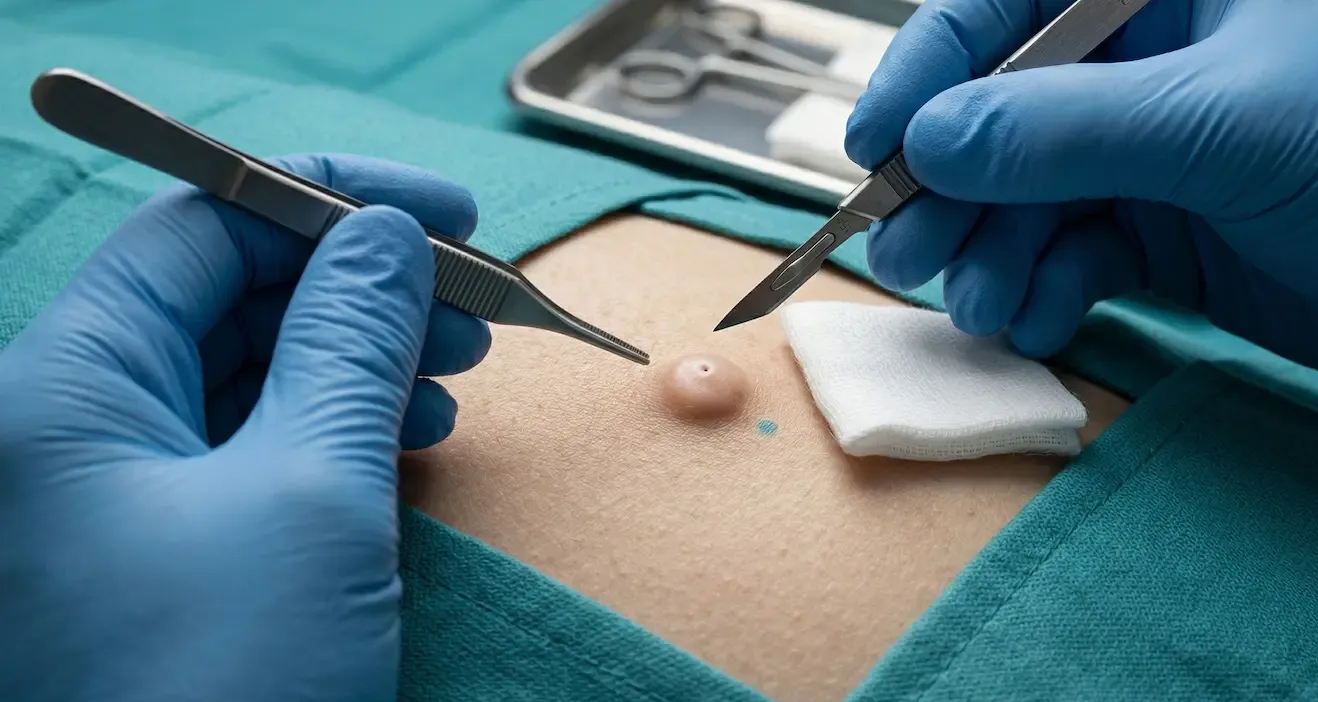
- B. Full Surgical Excision (The Permanent Fix): This is the gold standard. Under local anaesthetic, Dr. Bernard carefully removes the entire cyst, including the intact sac. By removing the "factory" that makes the keratin, we ensure the cyst does not return.
7. What to Expect During Your Procedure
Many patients are nervous about "surgery." At our Wigram clinic, we’ve designed the process to be stress-free:
- Local Anaesthetic: We use a very fine needle to numb the area. You will be awake and comfortable, feeling no pain—only a slight sensation of pressure.
- Precise Excision: Dr. Bernard uses specialized tools to detach the cyst sac from the surrounding tissue.
- Closure: Depending on the size, we use high-grade internal or external sutures (stitches) designed to minimize scarring.
- Histology: As a standard medical safety protocol, we routinely send the excised tissue to a lab for examination to provide 100% peace of mind that the tissue is benign.

8. Recovery: Life After Cyst Removal
"How long will I be off work?" is the #1 question we hear. Most patients can return to desk work the same day. If your job involves heavy lifting or the cyst was in a high-movement area (like a joint), we may recommend 1-2 weeks hours of light duties.
Aftercare Tips:
- Keep the dressing dry for the first 24 hours.
- Avoid strenuous gym sessions that might "pull" on the stitches.
- Apply the clinical silicone gel we recommend once the wound has closed to ensure the flattest, clearest scar possible.
💡 Pro-Tip for 2026: If you are having a cyst removed from the face or neck, ask us about Skin Boosters. These treatments can be timed with your recovery to improve overall skin texture and hydration around the procedure site. [Explore Aesthetics at 1 Health]
9. Why Choose 1 Health Christchurch for Minor Surgery?
When you search for "Cyst removal Christchurch," you’ll see many options. Here is why patients travel from Hornby, Halswell, and Rolleston to see us:
- GP-Led Clinical Safety: We are a fully accredited medical centre. We have the equipment to handle infections or complications that a beauty clinic cannot.
- Postgraduate Expertise: Dr. Bernard Teo has a specific interest in skin surgery, focusing on flap and graft techniques that prioritize cosmetic outcomes.
- Transparent Pricing: We provide an exact quote during your initial assessment—no hidden "facility fees."
- 7-Day Availability: We work around your schedule, not the other way around.
10. Frequently Asked Questions (FAQs)
Q: Can a cyst turn into cancer? A: It is extremely rare for an epidermoid cyst to become malignant. However, because we are medical professionals, we send all removed tissue for testing just to be absolutely sure.
Q: Will my insurance cover the removal? A: Many Southern Cross and private insurance policies cover "Minor Surgery" if the cyst is causing physical symptoms or is prone to infection. We are an Easy-Claim provider for Southern Cross.
Q: How much does cyst removal cost in New Zealand? A: At 1 Health, pricing depends on the size and location of the cyst. A consultation starts the process, where we provide a full, transparent breakdown of the surgical fee.
Ready for a "Lump-Free" 2026?
Don't let a small lump affect your confidence or cause you pain. Book a minor surgery assessment with Dr. Bernard Teo and the team at 1 Health Wigram today.
Have Questions About Your Health?
Our clinicians at 1 Health are here to help — whether it’s GP care, dental, travel vaccines, or facial aesthetics. Book a consultation anytime.
Book Online:
https://www.1health.nz/contact
Call:
Disclaimer:
This article is for general information only and is not medical advice. Every person’s health situation is different. For personalised guidance or diagnosis, please consult a qualified clinician.