
Understanding Dyspepsia and Reflux: Your Comprehensive Patient Guide
Published by 1 Health | Wigram, Christchurch | Open 7 Days Written by Dr. Jimmy Tiong (Consultant Gastroenterologist & Hepatologist) and Dr. Bernard Teo (GP)
If you've ever felt an uncomfortable burning sensation in your chest after a meal, or experienced persistent bloating and pain in your upper abdomen, you're not alone. These are among the most common reasons people visit their GP in New Zealand.
In clinical practice, these symptoms often go by two closely related names: dyspepsia and gastro-oesophageal reflux disease (GORD). While they are frequently used interchangeably by patients, they represent distinct conditions that require tailored management strategies.
What Are Dyspepsia and Reflux?
Dyspepsia (Indigestion)
Dyspepsia is a broad clinical term for pain or discomfort felt in the central upper abdomen. It is not a single disease but rather a collection of symptoms that can arise from a variety of causes. If you suffer from dyspepsia, you might feel:
- Persistent bloating or nausea.
- Feeling uncomfortably full immediately after starting a meal.
- A gnawing or burning sensation in the stomach area.
Interestingly, over 60% of all dyspepsia is classified as functional dyspepsia. This means that even though no underlying structural cause (like an ulcer) is found during a scan, the symptoms are genuinely felt and can significantly impact your daily quality of life.
GORD (Gastro-oesophageal Reflux Disease)
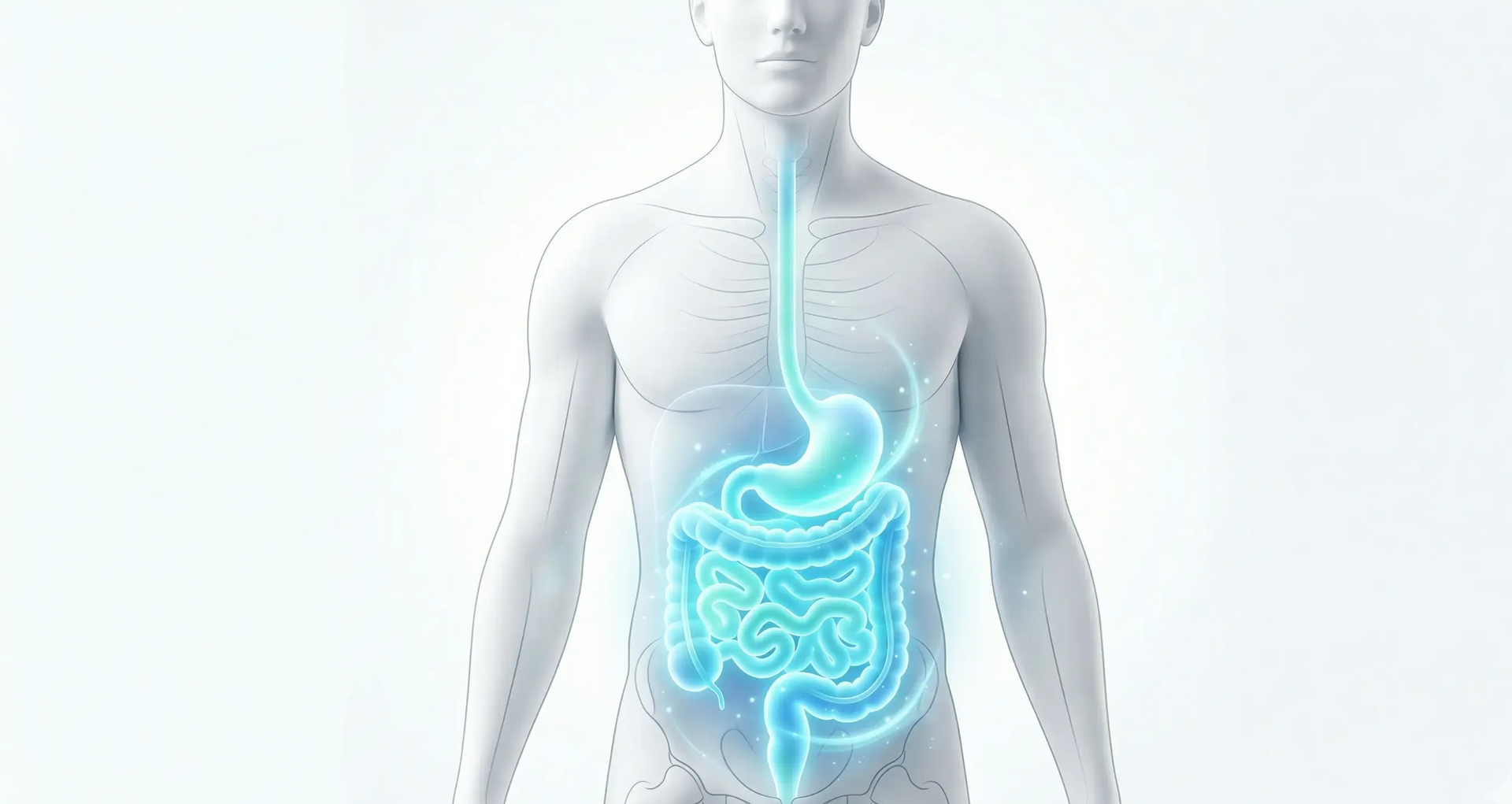
GORD occurs when stomach acid and contents flow back up into the oesophagus (the food pipe). This happens because the muscle at the base of the oesophagus—the lower oesophageal sphincter—doesn't close properly or relaxes too often. This backflow causes the familiar burning pain behind the breastbone known as heartburn, which can often be felt rising up towards the throat.
While dyspepsia and GORD are distinct, they frequently overlap, and many patients in our Christchurch clinics present with symptoms of both.
How Common Is It in New Zealand?
Dyspepsia and reflux are extremely common conditions worldwide, and New Zealand is no exception. Most of us will experience some degree of heartburn or indigestion at some point.
Research consistently shows that lifestyle factors play a major role in prevalence. Specifically, being overweight—particularly carrying extra weight around the abdomen—is associated with a significantly higher risk. People with a BMI over 30 have been shown to have roughly double the risk of GORD compared to those of a healthy weight. This is because increased abdominal pressure physically forces stomach contents back up the food pipe.
What Are the Symptoms?
Symptoms can vary wildly between individuals. Some people have significant irritation with mild symptoms, while others feel extreme distress despite having minimal physical damage.
Typical Symptoms:
- A burning sensation in the chest (heartburn), particularly after meals or when lying down.
- Acid or food refluxing back into the throat or mouth.
- Upper abdominal pain or discomfort.
- Persistent bloating, belching, or nausea.
Atypical (Less Obvious) Symptoms:
Sometimes GORD presents in ways you might not expect. You should speak to your GP if you have:
- A persistent cough, particularly at night.
- Chronic hoarseness or a sore throat.
- A sensation of a "lump" in the throat.
- Wheeze or asthma-like symptoms that don't respond to traditional inhalers.

When Should You See a Doctor?
While mild, infrequent heartburn can often be managed with lifestyle changes, you should book a review at 1 Health if:
- Your symptoms are new, persistent, or worsening.
- You've had no improvement with over-the-counter treatments.
- You are 50 years or older with new-onset dyspepsia (or 40 years or older if you are Māori, Pacific, or of Asian descent).
- You have a significant family history of gastric cancer.
⚠️ Seek Urgent Medical Attention (Red Flags)
Certain symptoms act as "red flags" and require prompt investigation to rule out serious underlying conditions:
- Difficulty swallowing (dysphagia): Especially if it is new or getting worse.
- Unexplained weight loss.
- Vomiting blood or passing black, tarry stools: These are signs of gastrointestinal bleeding.
- Iron deficiency anaemia: Feeling unusually tired, breathless, or pale.
- A palpable lump or persistent, severe pain in the abdomen.
If you experience any of these, please contact your GP urgently or present to your nearest emergency department.
How Is It Diagnosed?
H. pylori Testing
One of the most common and treatable causes of dyspepsia is an infection by Helicobacter pylori (H. pylori), a bacterium that lives in the stomach lining. In New Zealand, the preferred diagnostic method is a faecal antigen test (a simple stool test), which is over 95% accurate.
Important Note: You must stop taking proton pump inhibitors (PPIs) for at least two weeks before this test, as they can hide the infection and cause a false negative.
Gastroscopy (Upper GI Endoscopy)
A gastroscopy involves passing a thin, flexible camera through the mouth to examine the oesophagus and stomach. While not the first step for everyone, it is the gold standard for diagnosing:
- Oesophagitis (inflammation).
- Peptic ulcers.
- Barrett's oesophagus.
- Upper GI cancers.
| Strategy | Why It Helps |
|---|---|
| Maintain a healthy weight | Reduces abdominal pressure that forces acid upwards. |
| Eat smaller, frequent meals | Prevents the stomach from becoming uncomfortably distended. |
| Avoid trigger foods | Reduces direct irritation (common culprits: caffeine, spicy food, alcohol). |
| Elevate the head of your bed | Uses gravity to keep stomach contents down while you sleep. |
| Stop smoking | Smoking relaxes the sphincter muscle, allowing acid to escape. |
| Take PPIs correctly | Must be taken 30 minutes before your first meal to be effective. |
Advanced Care: 1 Health & JT Gastro
If your GP assessment indicates that further investigation is needed, 1 Health offers a unique advantage. We have a trusted specialist partnership with JT Gastro, led by Consultant Gastroenterologist Dr. Jimmy Tiong.
Why Choose JT Gastro?
Through this private pathway, you can avoid lengthy public waiting lists and access:
- Priority Gastroscopy & Colonoscopy: Fast-tracked investigation for persistent symptoms.
- AI-Assisted Detection: Dr. Tiong uses high-definition imaging and AI software to identify subtle lesions.
- Expertise: Dr. Tiong maintains an Adenoma Detection Rate (ADR) exceeding 50%—significantly higher than the international benchmark, which is directly linked to better cancer prevention.
Frequently Asked Questions
Can stress cause reflux? Yes. While stress doesn't directly create more acid, it can heighten pain sensitivity and alter how your gut moves, worsening symptoms of both GORD and functional dyspepsia.
Is it safe to take PPIs long-term? PPIs (like omeprazole) have a favorable safety profile. However, long-term use should be reviewed annually with your GP to ensure you are on the lowest effective dose.
Does H. pylori always need treatment? If the infection is found and you have symptoms or a history of ulcers, eradication with a 14-day course of antibiotics is generally recommended.
Book Your Review at 1 Health, Wigram
If you've been experiencing persistent symptoms, don't put it off. 1 Health is a trusted local GP clinic in Wigram, Christchurch, open 7 days a week.
📍 1 Henry Wigram Drive, Wigram 8042 📞 Open 7 days — including weekends 🌐 www.1health.nz
Tip for Southern Cross Members: We are an Easy-Claim provider. Many GP consultations can be claimed instantly at the desk—no forms, no waiting.
Have Questions About Your Health?
Our clinicians at 1 Health are here to help — whether it’s GP care, dental, travel vaccines, or facial aesthetics. Book a consultation anytime.
Book Online:
https://www.1health.nz/contact
Call:
Disclaimer:
This article is for general information only and is not medical advice. Every person’s health situation is different. For personalised guidance or diagnosis, please consult a qualified clinician.