Stuck Ring on a Swollen Finger: The Complete Patient Guide
Expert Removal Services at 1 Health Wigram, Christchurch
It is a scenario that causes instant panic: you go to slide off a ring you’ve worn for years, and it simply won’t budge. Perhaps you’ve just noticed your finger is slightly puffier than usual, or maybe an injury has caused rapid swelling. What was once a cherished piece of jewellery suddenly feels like a restrictive, painful vice.
A stuck ring is more than just a nuisance; in medical terms, it can quickly become a "constriction injury." If not managed correctly, it can lead to serious complications.
At 1 Health Wigram, we frequently see patients from across Christchurch—from Hornby to Halswell—who have tried every home remedy and now need professional medical intervention. This guide, written by Dr Bernard Teo, explains why rings get stuck, when you need to stop "DIY-ing" the solution, and how our 7-day clinic provides a faster, safer alternative to the Christchurch Hospital Emergency Department.
1. The Vicious Cycle: Why Do Rings Get Stuck?
Finger swelling (oedema) can occur for dozens of reasons. In Christchurch, we often see seasonal spikes; the high humidity and heat of a typical Canterbury summer can cause blood vessels to dilate and soft tissues to retain fluid.
Common causes include:
- Inflammatory Conditions: Arthritis or gout often causes the knuckles (specifically the proximal interphalangeal or PIP joint) to enlarge.
- Physical Trauma: Even a minor "jam" of the finger in a door or during a Saturday morning sports game can cause rapid swelling.
- Systemic Factors: High salt intake, pregnancy, or medications for blood pressure can lead to general fluid retention.
- Allergic Reactions: An insect bite on the hand can cause the finger to double in size within minutes.
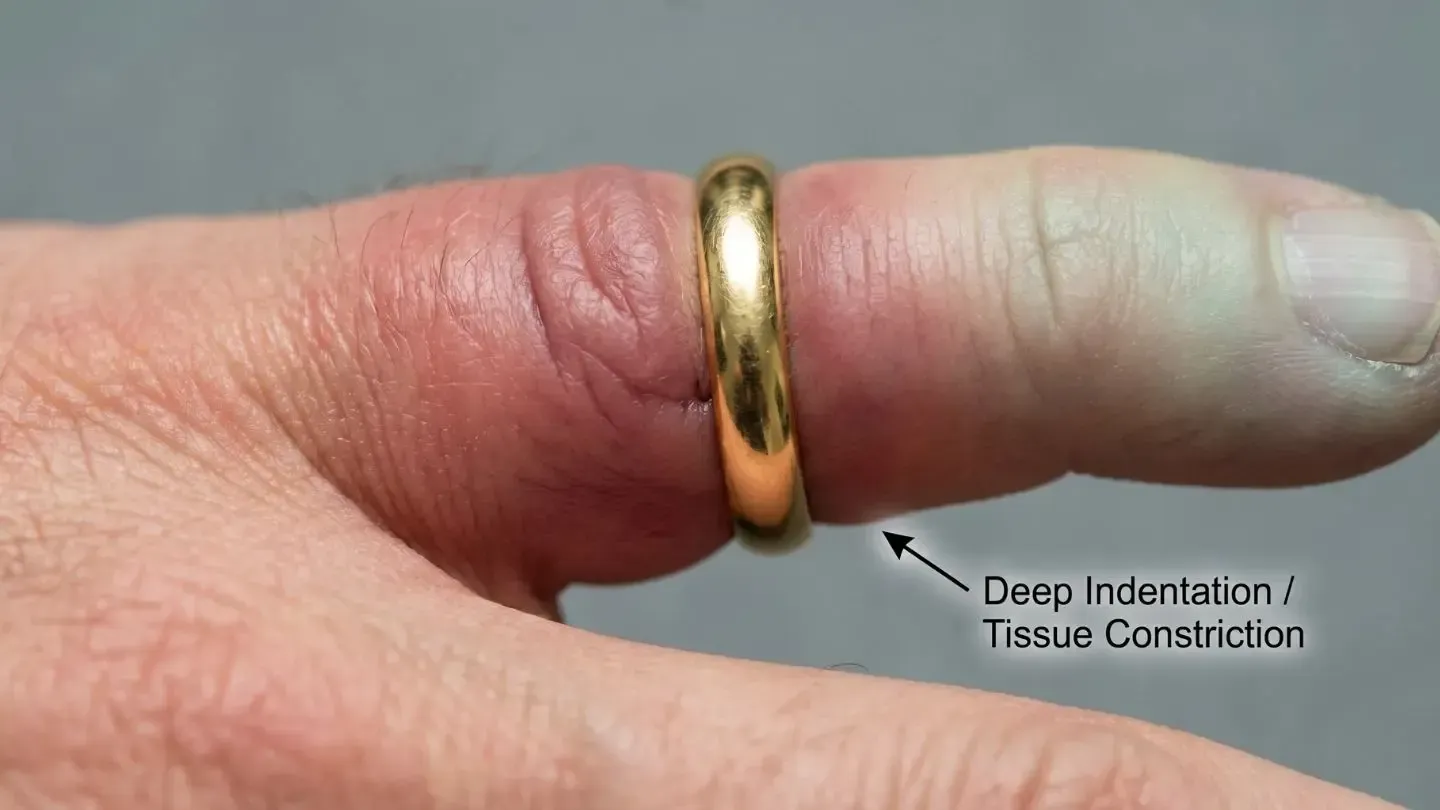
The "Vicious Cycle" of Constriction: Once a ring becomes tight, it begins to act as a tourniquet. It restricts the flow of lymphatic fluid and venous blood out of the finger.
Because the fluid can’t leave, the swelling increases. This increased swelling makes the ring even tighter, which further restricts drainage. This is the "vicious cycle." If left too long, it can eventually restrict arterial blood flow (the blood coming into the finger), leading to digital ischaemia—a medical emergency where the tissue begins to die due to lack of oxygen.
2. When to Stop "Trying" at Home: The Red Flags
Most people start with soap, Windex, or oil. While lubrication is a valid first step, there is a point where further attempts to "yank" the ring off will only cause more trauma to the skin and joint.
You should stop home attempts and visit 1 Health Wigram immediately if:
- The Finger Changes Colour: If the finger looks blue, purple, or unnaturally pale.
- Loss of Sensation: You feel "pins and needles" or a total loss of feeling in the tip of the finger.
- Temperature Change: The finger feels significantly colder than the others.
- Severe Pain: The throbbing is becoming unbearable.
- Skin Breakage: You have caused cuts or abrasions to the skin while trying to remove the ring, increasing the risk of infection.
3. Why Professional Removal is Essential
When you visit our clinic in the Wigram Health Hub, we don’t just "pull harder." We use clinical techniques designed to preserve both the integrity of your finger and, whenever possible, the jewellery itself.
The String Wrap (Winding) Technique
This is a sophisticated medical method where we use a specialised surgical suture or high-tensile string. We wind the string tightly around the swollen finger, starting from the knuckle and moving toward the ring. This temporarily "compresses" the swelling out of the tissue. The end of the string is then tucked under the ring and unwound, effectively "walking" the ring over the compressed area.
Professional Ring Cutting
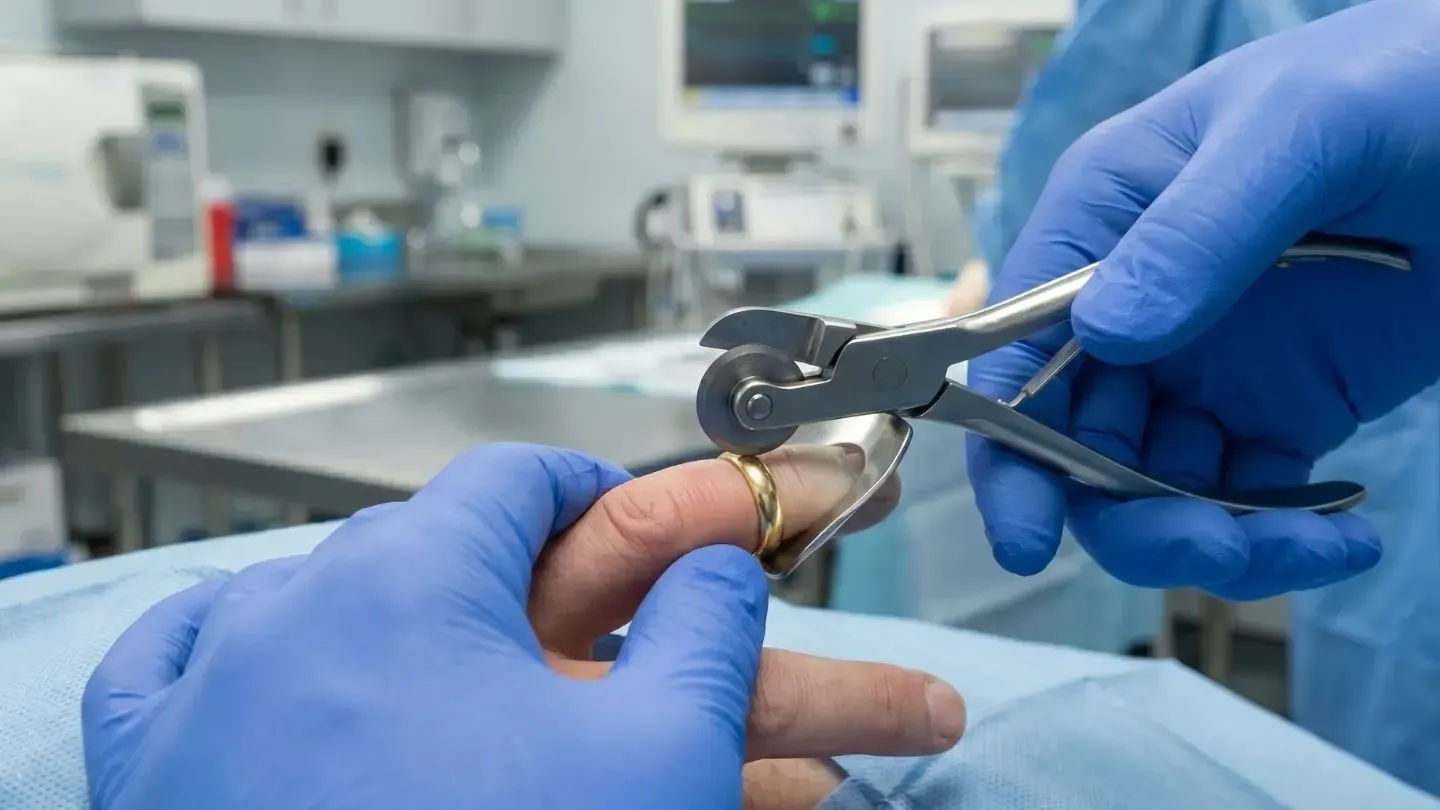
If the swelling is too severe or the joint is too damaged for the string method, we move to a professional ring cutter. Unlike a pair of pliers or a hardware store saw (which can slip and cause devastating nerve damage), our medical-grade manual and electric cutters are designed specifically for this task. They feature a protective guard that slides between the ring and your skin, ensuring the finger is 100% protected while the band is precisely cut.
Pain Management and IV Sedation
At 1 Health, we understand that a stuck ring can be incredibly painful, especially if the finger is broken or severely infected. As a clinic specialising in Minor Surgery, we offer local anaesthetic blocks to numb the finger entirely before we begin. For patients who are highly anxious or in extreme pain, we can also provide IV Sedation, allowing the procedure to be performed while you are in a relaxed, twilight state.
4. Avoiding the Christchurch ED Wait Times
Many people instinctively head to the Christchurch Hospital Emergency Department for a stuck ring. While the ED provides excellent care, "minor" issues like ring removal are often triaged with a lower priority than life-threatening accidents or heart attacks. This can result in waiting for 6 or 8 hours in a crowded waiting room.
1 Health Wigram offers a 7-day alternative. Because we are an integrated GP and Minor Surgery clinic, we can often see you much faster. We have the same medical-grade equipment as an ED, but in a calm, professional clinic environment with easy parking right outside the door.
5. Frequently Asked Questions (FAQ)
"Will my ring be ruined?"
In most cases, no. A professional ring cutter makes a single, clean break in the band. A skilled jeweller (we can recommend several in the Christchurch area) can easily solder the band back together and resize it, making it look as good as new. The only exceptions are certain "industrial" metals like Tungsten or Titanium, which cannot be cut with standard tools and instead must be "cracked" using specialized equipment—which we also manage.
"What if the finger is broken?"
This is why seeing a doctor is better than going to a jeweller. If your finger is stuck due to a fall or injury, we can perform a clinical assessment to check for fractures. If the bone is broken, "yanking" the ring off at home could cause permanent deformity or joint damage.
"How much does professional ring removal cost?"
Costs can vary depending on whether you need a simple removal, local anaesthetic, or sedation. However, we pride ourselves on transparent pricing and providing a high-value service that avoids the stress and time-loss of a hospital visit.
6. Post-Removal Care: What Happens Next?
Once the ring is off, the work isn't quite finished. The tissue that was trapped under the ring will be sensitive and potentially bruised.
Our clinical team will:
- Assess the "Neurovascular status" (ensuring blood and nerves are working correctly).
- Treat any skin abrasions or "ring sores" to prevent infection.
- Provide advice on "RICE" (Rest, Ice, Compression, Elevation) to bring the swelling down.
- Advise you on how long to wait before having the ring resized (usually at least 2–4 weeks until all swelling has permanently subsided).
Trust the Experts at 1 Health
A stuck ring is a medical problem, not just a jewellery problem. Don't risk the health of your finger by waiting or using unsafe tools at home.
Whether you are in Wigram, Halswell, Hornby, or anywhere in Christchurch, our expert team led by Dr Bernard Teo is available 7 days a week to provide safe, professional, and compassionate ring removal.
Don't wait until the pain becomes unbearable. Contact us today!
Have Questions About Your Health?
Our clinicians at 1 Health are here to help — whether it’s GP care, dental, travel vaccines, or facial aesthetics. Book a consultation anytime.
Book Online:
https://www.1health.nz/contact
Call:
Disclaimer:
This article is for general information only and is not medical advice. Every person’s health situation is different. For personalised guidance or diagnosis, please consult a qualified clinician.